Custodio
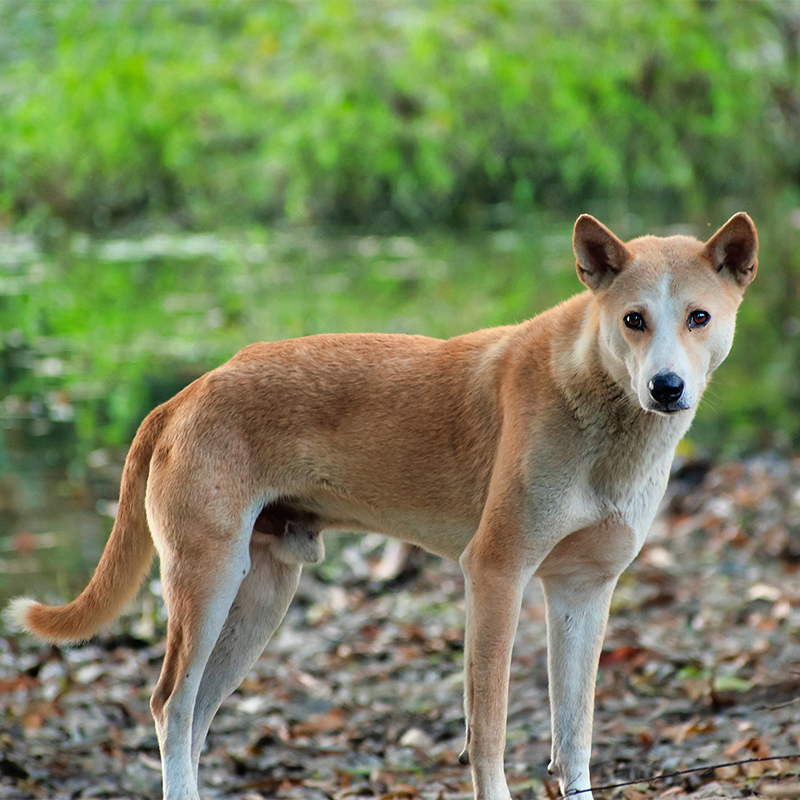
Custodio was the son of a majestic dog called El Capitán, whom the children of the hacienda affectionately knew as "El Capi". But unlike his father —a huge wolf dog with beautiful fur and powerful jaws—, Custodio was half mongrel, perhaps due to his mother's street lineage. However, in nobility and loyalty, Custodio not only equaled El Capi, but could well be said to surpass him.
El Capi's death was as tragic as it was beautiful. He fell to machete blows defending his owner, a good-hearted man, but hopelessly drunk, who had fallen asleep at the edge of a rural road. The evildoers who found him lying there didn't count on El Capi's fierceness. When the man woke from his drunkenness and learned how his faithful companion had died saving him, he couldn't bear the grief and shame. He took his own life.
The widow, devastated by so much pain, gave the little puppy Custodio to her compadre Dimas, a man who didn't drink and who also loved dogs. She couldn't keep him: every time she looked at the puppy, she relived El Capi's painful death.
For many years, Custodio lived beside Dimas as his most faithful shadow. But by the whims of fate, Dimas's wife was not a dog lover. As Custodio aged —his gait became slow, his fur lost its luster—, the animal's presence began to bother the woman. Day after day she harassed her husband, insisting that he should sacrifice that old dog that could even bring diseases to their children.
Offended by these complaints, Dimas began to take Custodio everywhere, thus freeing his wife from her "torment". But the peace of the home was already broken, far gone were those days when Custodio was a beautiful and playful puppy.
They weren't rich, but neither were they poor, and they prided themselves on being honorable people. Dimas had inherited from his father a gold-plated watch, and being a man unaccustomed to luxury, that was the most valuable object he possessed.
One fine day he had to go to town to pay a debt at the bank. Of course, he took Custodio with him. His wife had prepared a pair of saddlebags for him: in one, fifteen thousand pesos for the bank; in the other, a generous lunch that Dimas knew he would share with the dog.
At noon, tired from riding, with Custodio panting after having followed the mule, they stopped by the banks of a river. After sharing lunch, Dimas fell asleep while Custodio stood guard beside him.
Upon waking, Dimas removed his father's watch to wash his face and hands in the river, and resumed the journey in haste. Unusually, Custodio was extremely restless: he wouldn't stop barking and jumping around the mule, which had become nervous.
Finally, Dimas became exasperated with the dog's attitude. "Perhaps my wife is right," he thought, "Custodio is already very old." He took out his pistol and prepared to sacrifice his friend, believing it was time for him to rest in peace, since it seemed that age was driving him mad.
Just when Dimas pulled the trigger, Custodio jumped toward him and the mule, desperately trying to get his attention. The shot, which was aimed at the animal's head, lodged in his neck. Custodio let out a cry of pain and ran back down the road.
"Dear friend," murmured Dimas with regret, "you will surely die in the woods, but at last you will have your well-deserved rest."
Upon arriving in town, Dimas discovered to his horror that he carried neither the saddlebags nor his father's gold watch. He galloped back to the river where they had had lunch.
There he found Custodio lying in a pool of blood, but faithfully guarding the saddlebags and the watch that lay beside him. Upon seeing him arrive, the dying animal wagged his tail and whimpered softly, between pain and joy.
With eyes filled with tears, Dimas, feeling like he was dying, threw himself on Custodio to embrace him. The dog wagged his tail with pure bliss, licked his master's face one last time, exhaled his last breath, and finally departed to reunite with his majestic father, El Capitán.
True loyalty knows no breeds or appearances. Like his noble father, Custodio had given his life defending what he loved most.